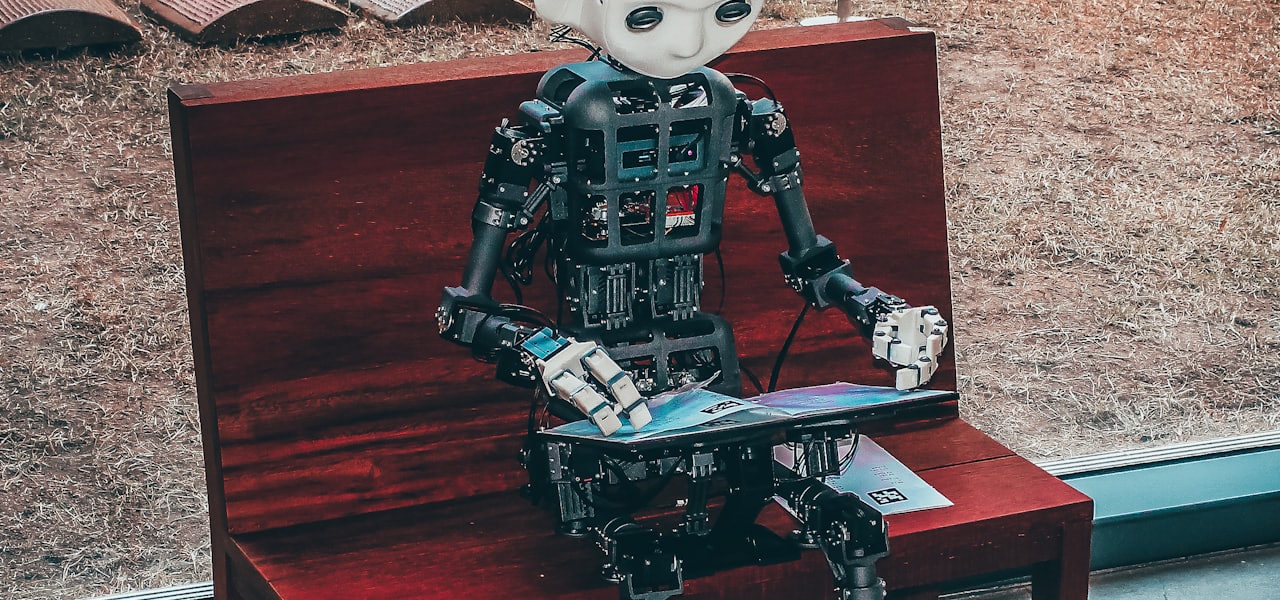
The Association of College and Research Libraries defines information literacy as a "set of integrated abilities encompassing the reflective discovery of information, the understanding of how information is produced and valued and the use of information in creating new knowledge and participating ethically in communities of learning". In the United Kingdom, the Chartered Institute of Library and Information Professionals' definition also makes reference to knowing both "when" and "why" information is needed. The 1989 American Library Association (ALA) Presidential Committee on Information Literacy formally defined information literacy (IL) as attributes of an individual, stating that "to be information literate, a person must be able to recognize when information is needed and have the ability to locate, evaluate and use effectively the needed information". In 1990, academic Lori Arp published a paper asking, "Are information literacy instruction and bibliographic instruction the same?" Arp argued that neither term was particularly well defined by theoreticians or practitioners in the field. Further studies were needed to lessen the confusion and continue to articulate the parameters of the question. The Alexandria Proclamation of 2005 defined the term as a human rights issue: "Information literacy empowers people in all walks of life to seek, evaluate, use and create information effectively to achieve their personal, social, occupational and educational goals. It is a basic human right in a digital world and promotes social inclusion in all nations." The United States National Forum on Information Literacy defined information literacy as "the ability to know when there is a need for information, to be able to identify, locate, evaluate, and effectively use that information for the issue or problem at hand." Meanwhile, in the UK, the library professional body CILIP, define information literacy as "the ability to think critically and make balanced judgements about any information we find and use. It empowers us as citizens to develop informed views and to engage fully with society." A number of other efforts have been made to better define the concept and its relationship to other skills and forms of literacy. Other pedagogical outcomes related to information literacy include traditional literacy, computer literacy, research skills and critical thinking skills. Information literacy as a sub-discipline is an emerging topic of interest and counter measure among educators and librarians with the prevalence of misinformation, fake news, and disinformation. Scholars have argued that in order to maximize people's contributions to a democratic and pluralistic society, educators should be challenging governments and the business sector to support and fund educational initiatives in information literacy. == History == The phrase "information literacy" first appeared in print in a 1974 report written on behalf of the National Commission on Libraries and Information Science by Paul G. Zurkowski, who was at the time president of the Information Industry Association (now the Software and Information Industry Association). Zurkowski used the phrase to describe the "techniques and skills" learned by the information literate "for utilizing the wide range of information tools as well as primary sources in molding information solutions to their problems" and drew a relatively firm line between the "literates" and "information illiterates." The concept of information literacy appeared again in a 1976 paper by Lee Burchina presented at the Texas A&M University library's symposium. Burchina identified a set of skills needed to locate and use information for problem solving and decision making. In another 1976 article in Library Journal, M.R. Owens applied the concept to political information literacy and civic responsibility, stating, "All [people] are created equal but voters with information resources are in a position to make more intelligent decisions than citizens who are information illiterates. The application of information resources to the process of decision-making to fulfill civic responsibilities is a vital necessity." In a literature review published in an academic journal in 2020, Oral Roberts University professor Angela Sample cites several conceptual waves of information literacy definitions as defining information as a way of thinking, a set of skills, and a social practice. The introduction of these concepts led to the adoption of a mechanism called metaliteracy and the creation of threshold concepts and knowledge dispositions, which led to the creation of the ALA's Information Literacy Framework. The American Library Association's Presidential Committee on Information Literacy released a report on January 10, 1989. Titled as the Presidential Committee on Information Literacy: Final Report, the article outlines the importance of information literacy, opportunities to develop it, and the idea of an Information Age School. The recommendations of the Committee led to establishment of the National Forum on Information Literacy, a coalition of more than 90 national and international organizations. In 1998, the American Association of School Librarians and the Association for Educational Communications and Technology published Information Power: Building Partnerships for Learning, which further established specific goals for information literacy education, defining some nine standards in the categories of "information literacy," "independent learning," and "social responsibility." Also in 1998, the Presidential Committee on Information Literacy updated its final report. The report outlined six recommendations from the original report, and examined areas of challenge and progress. In 1999, the Society of College, National and University Libraries (SCONUL) in the UK published The Seven Pillars of Information Literacy to model the relationship between information skills and IT skills, and the idea of the progression of information literacy into the curriculum of higher education. In 2003, the National Forum on Information Literacy, along with UNESCO and the National Commission on Libraries and Information Science, sponsored an international conference in Prague. Representatives from twenty-three countries gathered to discuss the importance of information literacy in a global context. The resulting Prague Declaration described information literacy as a "key to social, cultural, and economic development of nations and communities, institutions and individuals in the 21st century" and declared its acquisition as "part of the basic human right of lifelong learning". In the United States specifically, information literacy was prioritized in 2009 during President Barack Obama's first term. In effort to stress the value information literacy has on everyday communication, he designated October as National Information Literacy Awareness Month in his released proclamation. In 2015, the Association of College and Research Libraries (ACRL) adopted the Framework for Information Literacy for Higher Education, which defines information literacy as "the set of integrated abilities encompassing the reflective discovery of information, the understanding of how information is produced and valued, and the use of information in creating new knowledge and participating ethically in communities of learning".Association of College and Research Libraries (2015-02-09). "Framework for Information Literacy for Higher Education". Association of College and Research Libraries. American Library Association. Retrieved 2026-02-17. == Presidential Committee on Information Literacy == The American Library Association's Presidential Committee on Information Literacy defined information literacy as the ability "to recognize when information is needed and have the ability to locate, evaluate, and use effectively the needed information" and highlighted information literacy as a skill essential for lifelong learning and the production of an informed and prosperous citizenry. The committee outlined six principal recommendations. Included were recommendations like "Reconsider the ways we have organized information institutionally, structured information access, and defined information's role in our lives at home in the community, and in the work place"; to promote "public awareness of the problems created by information illiteracy"; to develop a national research agenda related to information and its use; to ensure the existence of "a climate conducive to students' becoming information literate"; to include information literacy concerns in teacher education democracy. In the updated report, the committee ended with an invitation, asking the National Forum and regular citizens to recognize that "the result of these combined efforts will be a citizenry which is made up of effective lifelong learners who can always find the information needed for the issue or decision at hand. This new
PowerBuilder
PowerBuilder is an integrated development environment owned by SAP since the acquisition of Sybase in 2010. On July 5, 2016, SAP and Appeon entered into an agreement whereby Appeon, an independent company, would be responsible for developing, selling, and supporting PowerBuilder. Over the years, PowerBuilder has been updated with new standards. In 2010, a major upgrade of PowerBuilder was released to provide support for the Microsoft .NET Framework. In 2014, support was added for OData, dockable windows, and 64-bit native applications. In 2019 support was added for rapidly creating RESTful Web APIs and non-visual .NET assemblies using the C# language and the .NET Core framework. And PowerScript client app development was revamped with new UI technologies and cloud architecture. In 2025 the IDE was revamped with new code editor and ultra-fast compiler. Appeon has been releasing new features every 6-12 month cycles, which per the product roadmap focus on four key focus areas: sustaining core features, modernizing application UI, improving developer productivity, and incorporating more Cloud technology. == Features == PowerBuilder has a native data-handling component called a DataWindow, which can be used to create, edit, and display data from a database. This object gives the programmer a number of tools for specifying and controlling user interface appearance and behavior, and also provides simplified access to database content and JSON or XML from Web services. To some extent, the DataWindow frees the programmer from considering the differences between Database Management Systems from different vendors. DataWindow can display data using multiple presentation styles and can connect to various data sources. == Usage == PowerBuilder is used primarily for building business-oriented CRUD applications. Although new software products are rarely built with PowerBuilder, many client-server ERP products and line-of-business applications built in the late 1980s to early 2000s with PowerBuilder still provide core database functions for large enterprises in government, higher education, manufacturing, insurance, banking, energy, and telecommunications. == History == === Early history === PowerBuilder originated from Computer Solutions Inc. (CSI), a software consulting firm founded in 1974 by Mitchell Kertzman in Massachusetts. CSI developed GrowthPower, an MRP II software package with integrated financial modules released in 1981, which ran exclusively on the HP 3000 platform and achieved over 1,000 customer installations at its peak. In the late 1980s, as demand increased for graphical user interfaces amid the rise of Microsoft Windows, Kertzman partnered with Dave Litwack, former executive vice president of product development at Cullinet Software (acquired by Computer Associates in 1989). Litwack joined the company in 1988 as head of research and development to develop a client/server GUI tool, leading to its rebranding as Powersoft Corporation in 1990. PowerBuilder 1.0 was released in July 1991 as a rapid application development tool featuring the DataWindow and PowerScript language. Powersoft went public on February 3, 1993, with shares closing at $38 from an initial $20 price. Sybase announced its acquisition of Powersoft on November 15, 1994, in a stock swap valued at approximately $940 million; the merger closed on February 14, 1995, at a revised value of about $904 million due to Sybase's stock fluctuations. === Recent history === In December 2013 SAP announced the new version going directly to number 15 and released a beta version. Key features included support for the .NET Framework v4.5, SQL Server 2012, Oracle 12, Windows 8, OData and Dockable Windows. SAP later released this as version 12.6. On May 31, 2019, PowerBuilder 2019 was released by Appeon. This release supports C# development. It provides a new C# IDE, .NET data access objects, C# migration solution, Web API client, and UI themes. On April 3, 2020, PowerBuilder 2019 R2 was launched by Appeon. This release includes a first-ever PowerScript-to-C# code converter, which can automatically migrate 80-95% of PowerBuilder business logic and DataWindows to C#. Interoperability between PowerScript and .NET programming languages is also now supported. Many existing features have also been enhanced. On January 22, 2021, PowerBuilder 2019 R3 was launched by Appeon. This release provides a groundbreaking new app deployment technology called PowerClient, which securely automates the installation and update of client apps over HTTPS. C# Web API development has been greatly enhanced with asynchronous programming and support for Amazon Aurora and Azure cloud databases. Aside from many other new features, PowerBuilder 2019 R3 is a long-term support (LTS) version that replaces previous LTS versions On August 6, 2021, PowerBuilder 2021 was launched by Appeon. The Cloud deployment capability of the PowerBuilder 2021 IDE, in conjunction with the matching PowerServer 2021 runtime, was revamped, bringing PowerBuilder up-to-date with the latest .NET technologies. The presentation layer now executes PowerScript natively on Windows devices. The middle-tier has been rebuilt around REST API standard with a pure .NET Core implementation. A new CI/CD utility that integrates with Git/SVN and Jenkins, witch compiles all PowerBuilder projects using the command-line interface, was added alongside other features. On September 4, 2022, PowerBuilder 2022 was launched by Appeon. This release brings enhancements to the productivity of developing both client/server & installable cloud apps and more security measures to safeguard your apps. It includes many new features, including Windows 11 support, introducing time-saving functionalities to the IDE, such as Tabbed Code Editor, Jump to Objects, and Quick Code Search, and supports the latest HTTP/2 and TLS 1.3 protocols and two-way TLS authentication. On August 4, 2023, PowerBuilder 2022 R2 was launched by Appeon. This release introduces a range of new features aimed at helping developers build powerful, feature-rich, and secure client/server and installable cloud apps more efficiently, including tabbed windows, fillable PDFs, and SMTP client. On January 8, 2024, PowerBuilder 2022 R3 was launched by Appeon. This release is a long-term support version. Features previously released in earlier releases have been enhanced and/or corrected. On May 7, 2025, PowerBuilder 2025 was launched by Appeon. This release delivers a revamped IDE that boosts developer productivity throughout the SLDC—from writing and extending code to debugging, automating builds, and deploying applications. It features a new-generation code editor, ultra-fast compiler, automatic REST API creation, faster GIT operations, and codeless UI modernization features. == Features == PowerBuilder is an object-oriented programming language. Nearly all of the visual and non-visual objects support inheritance, polymorphism, and encapsulation. The programmer may utilize a common code framework such as PowerBuilder Foundation Classes, also known as PFC, to inherit objects from and leverage pre-existing code. The DataWindow is the key component (and selling point) of PowerBuilder. The DataWindow offers a visual SQL painter which supports outer joins, unions and subquery operations. It can convert SQL to visual representation and back, so the developer can use native SQL if desired. DataWindow updates are automatic — it produces the proper SQL at runtime based on the DBMS to which the user is currently connected. This feature makes it easier for developers who are not experienced with SQL. The DataWindow also has the built-in ability to both retrieve data and update data via stored procedures or REST Web APIs as well as import/export JSON data. The RESTClient object introduced in PowerBuilder 2017 facilitates bridging the DataWindow with REST Web APIs and requiring minimal coding. === RDBMS interfaces === PowerBuilder offers native interfaces to all major databases, as well as ODBC and OLE-DB, in the Enterprise version. There are many connectivity options that allow performance monitoring and tuning, such as: Integrated security Tracing of all SQL Isolation level Password expiration dialog Blocking factor Number of SQL statements to cache Use connection pool Thread safety Trace ODBC API calls Due to the information about the database schema (such as primary key information) that are stored in PowerBuilder's data dictionary, the code required to implement data display and browsing is greatly simplified, because the dictionary information allows generation of the appropriate SQL behind the scenes. PowerBuilder supports the following ways of interacting with a database: DataWindow this is the simplest approach, relying on automatically generated SQL. Embedded SQL Embedded SQL supports SELECT, INSERT, UPDATE, DELETE and cursors. This option is used when the developer desires more control than is available with the
Peñabot
Peñabot is the nickname for automated social media accounts allegedly used by the Mexican government of Enrique Peña Nieto and the PRI political party to keep unfavorable news from reaching the Mexican public. Peñabot accusations are related to the broader issue of fake news in the 21st century. == History of disinformation in Mexican politics == The PRI political party has been reported to use fake news since before Peña Nieto. The main tactic originally was to spread such propaganda through open radio and television networks. Such tactic was effective in Mexico, because newspaper readership is low and cable TV is largely limited to the middle classes; consequently, the country's two major television networks – Televisa and TV Azteca – exert a significant influence in national politics. Televisa itself, not only owns around two-thirds of the programming on Mexico's TV channels, making it not only Mexico's largest television network, but also is the largest media network in the Spanish-speaking world. == Peñabots == Analysts have given the name Peñabots to a suspected network of automated accounts on social media used by the Mexican government to spread pro-government propaganda and to marginalize dissenting opinions in social media. The bots were first noticed in the 2012 elections when they were used to disseminate opinions in support of Enrique Peña Nieto on social networks such as Twitter and Facebook. According to Aristegui Noticias, their usage went against articles 6 and 134 of the Mexican Constitution. Those used by Peña Nieto's government cost an estimated 80 million pesos monthly, which news outlets argued only helped the government spread fake support towards the president, but did not have a benefit towards Mexican people (with whom EPN was highly unpopular). Facebook held approximately 640,321 Peñabots, while Twitter had less. As of July 2017, Oxford Internet Institute's Computational Propaganda Research Project claimed many western democracies, Mexico included, perform social media manipulation, thus saying the manipulation comes directly from the Mexican government itself. During Peña Nieto's subsequent presidency, analysts noted that Peñabots were used to overpower trending topics that critiqued government, to flood trending government critical hashtags with spam, to create fake trends by pushing alternative hashtags, and to push smear campaigns and threats against government-critical activists and journalists. Peñabots were distinguished as their pattern of activity was distinct from that of ordinary interaction on social networks. === Meadebots === On Twitter it was reported that about 94% of the followers of 2018 presidential candidate from the PRI Jose Antonio Meade were bots. When Antonio Meade presented himself as a candidate for the 2018 presidential election, his social media accounts such as "@MovimientoMEADE" (created by the PRI's official account @PRI_Nacional), obtained a huge quantity of followers in a short span of time. Some users noticed and brought it to attention, and after investigation it was reported 94% of such followers were bots (702,000 out of 747,000), and the account was eliminated from Twitter after 20 hours. The fake accounts used the hashtags #YoConMeade and #Meade18. It was further revealed was that Meade's official account on Twitter, @JoseAMeadeK had 25% bots (216,000 fake followers out of the 981,000). == Manipulation of news media in Mexico, through television == The Mexican government of Peña Nieto has been accused of using various means to keep unfavorable news from reaching the Mexican people. Many Mexicans have protested this practice as it clearly goes against the freedom of speech. The PRI has been reported to use fake news since before Peña Nieto. The main tactic has been to spread such propaganda through radio and television. This tactic is perceived as effective in Mexico, because newspaper readership is low and research on the Internet and cable TV is largely limited to the middle classes; consequently, the country's two major television networks – Televisa and TV Azteca – exert a significant influence in national politics. Televisa itself, owns around two-thirds of the programming on Mexico's TV channels, making it not only Mexico's largest television network, but also is the largest media network in the Spanish-speaking world. In June 2012, before the 2012 Mexican presidential elections, the British newspaper The Guardian published a series of allegations claiming Televisa, sold favorable coverage to top politicians in its news and entertainment shows, this scandal became known as the Televisa controversy. The documents published by 'The Guardian alleged that a secretive circle within Televisa manipulated news coverage to favor PRI presidential candidate Enrique Peña Nieto, who was poised as favorite to win. Televisa's secret circle supposedly commissioned videos to promote Peña Nieto and lash out his political rivals in 2009. The Guardian documents suggest that Televisa's secret team distributed such videos through e-mail, posting them posted them on Facebook and YouTube, some can still be seen there. Another document was a PowerPoint presentation, with a slide explicitly aimed at rival leftist candidate of the Party of the Democratic Revolution (PRD), Andrés Manuel López Obrador. Supposedly given to The Guardian by a Televisa employee. The document's authenticity was never possible to confirm– however dates, names, and events largely coincide. Televisa refused to talk the documents, and denied a relationship with the PRI or its presidential candidate, saying that they had provided equal media coverage to all parties. Televisa published an article supposedly showing discrepancies in The Guardian documents and denying accusations. Mexican citizens complained about the perceived favoritism towards Enrique Peña Nieto and the PRI, protesting through the Yo Soy 132 movement which Televisa covered in detail. However, Televisa's news media coverage is perceived to have been biased, by using a media coverage tactic Mexican citizens call cortinas de humo (smoke screens). These introduce a news scandal giving extensive coverage to distract citizens from a potential conflict-of-interest or controversy that could damage the image of the politician favored by the network. An example of a perceived smoke screen would be the news media coverage of "Caso Michoacán" and "Caso Paolette" distracting all the attention from the parallel "Yo soy 132" movement. A few years later, on the day of September 11, 2016; factual evidence of Televisa's performing media manipulation emerged, when a Televisa news anchor while live-on air reading a teleprompter, mistakenly read out loud that "try that Jaime "Ël Bronco" Rodríguez Calderón (Nuevo Leon's governor) is mentioned as little as possible". Newspaper El Universal caught it on video and published it social media. Televisa didn't mention the story and declined to comment. Lack of news coverage concerning Nuevo León's Governor Jaime Rodriguez, is perceived due to him being the first elected governor to not be part of any political party (Independent Governor), and because unlike the governors from the PRI preceding him, the independent governor "El Bronco" doesn't spend money on publicity at all, preferring to communicate all news by using social media such as Twitter and Facebook. While the incident may have proven Televisa's bias, there wasn't anything to incriminate the PRI political party or Enrique Peña Nieto, though it did further suspicion of Televisa manipulating news media. In contrast, a December 2017 article of The New York Times, reported Enrique Peña Nieto spending about 2000 million dollars on publicity, during his first 5 years as president, the largest publicity budget ever spent by a Mexican President. Additionally, 68 percent of news journalists admitted to not believe to have enough freedom of speech, and award-winning news reporter Carmen Aristegui was controversially fired shortly after revealing the Mexican White House scandals. == Violence and spying towards news journalists and civil rights activists == Far for only being receiving accusations of spreading fake news, the Mexican government of EPN (Enrique Peña Nieto) has also been accused of violence towards news journalists, and of spying on them, and also towards civil right leaders and their families. During his tenure as president, Peña Nieto has been accused of failing to protect news journalists, whose deaths are speculated to be politically triggered, by politicians attempting to prevent them from covering political scandals. The New York Times published a news report on the matter titled, "In Mexico it's easy to kill a journalist", on it mentioning how during EPN's government, Mexico became one of the worst countries on which to be a journalist. The assassination of journalist Javier Valdez on May 23, 2017, received national coverage, with multiple news journalists
Social recruiting
Social recruiting (social hiring or social media recruitment) is recruiting candidates by using social platforms as talent databases or for advertising. Social recruiting uses social media profiles, blogs, and other Internet sites to find information on candidates. It also uses social media to advertise jobs either through HR vendors or through crowdsourcing where job seekers and others share job openings within their online social networks. Social recruiting's effectiveness and return on investment have been difficult to determine, since applicants do not usually apply through the social channels which first attracted them. In May 2013, Maximum Employment Marketing Group released the Social Recruitment Monitor, which ranks the reach, engagement, and interactivity of employers' social recruiting efforts around the world. == Social recruitment software == The social recruitment software market (a form of e-recruitment) is often included in the wider talent management software sector. Bersin & Associates valued the wider talent management market at over $2bn in 2007. Social recruitment increasingly sits at an intersection of a number of fast-moving areas including social networking, recruitment and now cloud computing. Additionally, mobile recruiting has become another hot topic, especially with the rise in tablet and smartphone usage. In 2012, there was a rise of tech companies using social recruiting applications to find and screen applicants. As more companies saw value in filling jobs by putting them on the social platforms where millions of people spend at least 37 minutes daily, there developed a much larger focus on social recruiting among the talent acquisition community. By mid-2013, many major enterprise companies such as Pepsi, Gap, AIG, and Oracle had begun effectively utilizing social recruiting software, making it clear that large corporations were open to automating or streamlining (and ultimately investing in) their social recruiting processes.
Hybrid cryptosystem
In cryptography, a hybrid cryptosystem is one which combines the convenience of a public-key cryptosystem with the efficiency of a symmetric-key cryptosystem. Public-key cryptosystems are convenient in that they do not require the sender and receiver to share a common secret in order to communicate securely. However, they often rely on complicated mathematical computations and are thus generally much more inefficient than comparable symmetric-key cryptosystems. In many applications, the high cost of encrypting long messages in a public-key cryptosystem can be prohibitive. This is addressed by hybrid systems by using a combination of both. A hybrid cryptosystem can be constructed using any two separate cryptosystems: a key encapsulation mechanism, which is a public-key cryptosystem a data encapsulation scheme, which is a symmetric-key cryptosystem The hybrid cryptosystem is itself a public-key system, whose public and private keys are the same as in the key encapsulation scheme. Note that for very long messages the bulk of the work in encryption/decryption is done by the more efficient symmetric-key scheme, while the inefficient public-key scheme is used only to encrypt/decrypt a short key value. == Implementations and standards == All practical implementations of public key cryptography today employ a hybrid system. Examples include the TLS protocol and the SSH protocol, that use a public-key mechanism for key exchange (such as Diffie-Hellman) and a symmetric-key mechanism for data encapsulation (such as AES). The OpenPGP file format and the PKCS#7 file format are other examples. Hybrid Public Key Encryption (HPKE, published as RFC 9180) is a modern standard for generic hybrid encryption. HPKE is used within multiple IETF protocols, including Messaging Layer Security (MLS), Oblivious DNS over HTTPS, Oblivious HTTP, Privacy Preserving Measurement, and TLS Encrypted Client Hello. Envelope encryption is an example of a usage of hybrid cryptosystems in cloud computing. In a cloud context, hybrid cryptosystems also enable centralized key management. == Example == To encrypt a message addressed to Alice in a hybrid cryptosystem, Bob does the following: Obtains Alice's public key. Generates a fresh symmetric key for the data encapsulation scheme. Encrypts the message under the data encapsulation scheme, using the symmetric key just generated. Encrypts the symmetric key under the key encapsulation scheme, using Alice's public key. Sends both of these ciphertexts to Alice. To decrypt this hybrid ciphertext, Alice does the following: Uses her private key to decrypt the symmetric key contained in the key encapsulation segment. Uses this symmetric key to decrypt the message contained in the data encapsulation segment. == Security == If both the key encapsulation and data encapsulation schemes in a hybrid cryptosystem are secure against adaptive chosen ciphertext attacks, then the hybrid scheme inherits that property as well. However, it is possible to construct a hybrid scheme secure against adaptive chosen ciphertext attacks even if the key encapsulation has a slightly weakened security definition (though the security of the data encapsulation must be slightly stronger). == Envelope encryption == Envelope encryption is term used for encrypting with a hybrid cryptosystem used by all major cloud service providers, often as part of a centralized key management system in cloud computing. Envelope encryption gives names to the keys used in hybrid encryption: Data Encryption Keys (abbreviated DEK, and used to encrypt data) and Key Encryption Keys (abbreviated KEK, and used to encrypt the DEKs). In a cloud environment, encryption with envelope encryption involves generating a DEK locally, encrypting one's data using the DEK, and then issuing a request to wrap (encrypt) the DEK with a KEK stored in a potentially more secure service. Then, this wrapped DEK and encrypted message constitute a ciphertext for the scheme. To decrypt a ciphertext, the wrapped DEK is unwrapped (decrypted) via a call to a service, and then the unwrapped DEK is used to decrypt the encrypted message. In addition to the normal advantages of a hybrid cryptosystem, using asymmetric encryption for the KEK in a cloud context provides easier key management and separation of roles, but can be slower. In cloud systems, such as Google Cloud Platform and Amazon Web Services, a key management system (KMS) can be available as a service. In some cases, the key management system will store keys in hardware security modules, which are hardware systems that protect keys with hardware features like intrusion resistance. This means that KEKs can also be more secure because they are stored on secure specialized hardware. Envelope encryption makes centralized key management easier because a centralized key management system only needs to store KEKs, which occupy less space, and requests to the KMS only involve sending wrapped and unwrapped DEKs, which use less bandwidth than transmitting entire messages. Since one KEK can be used to encrypt many DEKs, this also allows for less storage space to be used in the KMS. This also allows for centralized auditing and access control at one point of access.
Common data model
A common data model (CDM) can refer to any standardised data model which allows for data and information exchange between different applications and data sources. Common data models aim to standardise logical infrastructure so that related applications can "operate on and share the same data", and can be seen as a way to "organize data from many sources that are in different formats into a standard structure". A common data model has been described as one of the components of a "strong information system". A standardised common data model has also been described as a typical component of a well designed agile application besides a common communication protocol. Providing a single common data model within an organisation is one of the typical tasks of a data warehouse. == Examples of common data models == === Border crossings === X-trans.eu was a cross-border pilot project between the Free State of Bavaria (Germany) and Upper Austria with the aim of developing a faster procedure for the application and approval of cross-border large-capacity transports. The portal was based on a common data model that contained all the information required for approval. === Climate data === The Climate Data Store Common Data Model is a common data model set up by the Copernicus Climate Change Service for harmonising essential climate variables from different sources and data providers. === General information technology === Within service-oriented architecture, S-RAMP is a specification released by HP, IBM, Software AG, TIBCO, and Red Hat which defines a common data model for SOA repositories as well as an interaction protocol to facilitate the use of common tooling and sharing of data. Content Management Interoperability Services (CMIS) is an open standard for inter-operation of different content management systems over the internet, and provides a common data model for typed files and folders used with version control. The NetCDF software libraries for array-oriented scientific data implements a common data model called the NetCDF Java common data model, which consists of three layers built on top of each other to add successively richer semantics. === Health === Within genomic and medical data, the Observational Medical Outcomes Partnership (OMOP) research program established under the U.S. National Institutes of Health has created a common data model for claims and electronic health records which can accommodate data from different sources around the world. PCORnet, which was developed by the Patient-Centered Outcomes Research Institute, is another common data model for health data including electronic health records and patient claims. The Sentinel Common Data Model was initially started as Mini-Sentinel in 2008. It is used by the Sentinel Initiative of the USA's Food and Drug Administration. The Generalized Data Model was first published in 2019. It was designed to be a stand-alone data model as well as to allow for further transformation into other data models (e.g., OMOP, PCORNet, Sentinel). It has a hierarchical structure to flexibly capture relationships among data elements. The JANUS clinical trial data repository also provides a common data model which is based on the SDTM standard to represent clinical data submitted to regulatory agencies, such as tabulation datasets, patient profiles, listings, etc. === Logistics === SX000i is a specification developed jointly by the Aerospace and Defence Industries Association of Europe (ASD) and the American Aerospace Industries Association (AIA) to provide information, guidance and instructions to ensure compatibility and the commonality. The associated SX002D specification contains a common data model. === Microsoft Common Data Model === The Microsoft Common Data Model is a collection of many standardised extensible data schemas with entities, attributes, semantic metadata, and relationships, which represent commonly used concepts and activities in various businesses areas. It is maintained by Microsoft and its partners, and is published on GitHub. Microsoft's Common Data Model is used amongst others in Microsoft Dataverse and with various Microsoft Power Platform and Microsoft Dynamics 365 services. === Rail transport === RailTopoModel is a common data model for the railway sector. === Other === There are many more examples of various common data models for different uses published by different sources.
Short Weather Cipher
The Short Weather Cipher (German: Wetterkurzschlüssel, abbreviated WKS), also known as the weather short signal book, was a cipher, presented as a codebook, that was used by the radio telegraphists aboard U-boats of the German Navy (Kriegsmarine) during World War II. It was used to condense weather reports into a short 7-letter message, which was enciphered by using the naval Enigma and transmitted by radiomen to intercept stations on shore, where it was deciphered by Enigma and the 7-letter weather report was reconstructed. == History == During World War II, during various times, different versions of the cipher were in operation. The first issue carried the codename Weimar. It was replaced by the edition Eisenach on 20 January 1942. On 10 March 1943, the third edition of the weather key, bearing the codename Naumburg, entered into force. On May 9, 1941, during Operation Primrose, the operation to occupy Åndalsnes and create a diversion south of Trondheim in Norway as part of the Norwegian Campaign, an intact Naval Enigma (M3) cipher machine, a copy of the "Weimar" version of the short weather cipher and a copy of the short signal book (German: Kurzsignalbuch or Kurzsignale for short) was recovered from the submarine U-110, that was captured in the North Atlantic east of Cape Farewell, Greenland. This enabled the cryptanalysts in Bletchley Park to break the encryption of the M3 and to decipher the German submarine radio messages. The Short Weather Cipher was critical in the cryptanalysis of the Naval Enigma M4 and yielded excellent cribs. On 30 October 1942, a copy of the Wetterkurzschlüssel, the short weather cipher, and of the short signal book, the Kurzsignale, were recovered as part of a daring raid on the U-boat U-559, when three Royal Navy sailors, Lieutenant Anthony Fasson, Able Seaman Colin Grazier and NAAFI canteen assistant Tommy Brown, then boarded the abandoned submarine, and recovered the documents after a 90-minute search. They reached the Government Code and Cypher at Bletchley Park after a three-week delay, on 24 November 1942. The documents which cost the lives of Fasson and Grazier proved to be particularly important in breaking the Naval Enigma M4. The version of the short weather cipher recovered was the Eisenach version. Unlike the first version Weimar, the Eisenach did not list the 26 rotor positions that were indicated by a letter, to be used in enciphering weather reports. Thus, Hut 8 cryptanalysts thought that all four rotors were used to encipher weather reports. Testing on the Bombes began to surface weather kisses (identical messages in two cryptosystems). On 13 December 1942, a crib obtained using the Short Weather Cipher gave a key with the Naval Enigma M4 rotatable Umkehrwalze (reversing roller or reflector) in the neutral position, making it equivalent to a standard Enigma and thus making B-Dienst messages potentially breakable on existing bombes. Hut 8 learned that the 4-letter indicators for regular U-boat messages were the same as 3-letter indicators for weather messages the same day, except for one extra letter. This meant that once the key was found for a weather message on any day, the fourth rotor had to be only tested in 26 positions to find the full 4-letter key. By the end of the day on Sunday 13 December, Rodger Winn of the Submarine Tracking Room at Bletchley Park knew that Shark Enigma Cipher was broken. When the third edition of the short signal book was introduced on 10 March 1943, Hut 8 was immediately deprived of cribs. However, by the 19 March, cribs were again being used by Hut 8 personnel, using the method of employing short signal sighting reports. These were reports made by U-boats when contact was made with Kurzsignalheft code book. Hut 8 managed to solve Shark for 90 out of 112 days before the end of June. Kurzsignalheft short sighting reports also used M4 in M3 mode. By the end of June, four-rotor bombes had entered service at Bletchley Park, and by August had been introduced by the US Navy. From September onwards, Shark was generally solved within 24 hours. == Operation == The U-boat encoded weather reports using the Short Weather Cipher, before being enciphered on the Naval Enigma. The shore patrol of the Kriegsmarine, deciphered the message and decoded it, then forwarding it to a central meteorological station, which rebroadcast the data as ship synoptics, after enciphering it with additive tables using a cipher, which was called Germet 3 by Hut 8 personnel. The short weather cipher coded weather reports using a polyphonic single-letter code with X missing. A = +28° ◦ B = +27° ◦ C = +26° ◦ D = +25° ◦ . . . ◦ W = +6° ◦ Y= +5° ◦ Z = +4° ◦ A = +3° ◦ B = +2° ◦ C = +1° ◦ D = 0° ◦ E =−1° ◦ F =−2° ◦ . . . ◦ Z = −21° ◦ In a similar way, water temperature, atmospheric pressure, humidity, wind direction, wind velocity, visibility, degree of cloudiness, geographic latitude, and geographic longitude had to be coded in a prescribed order with the weather report consisted of a single short word. Based on the approximate knowledge of the position of the submarine, the Kriegsmarine telegraphist who received the message could translate the letter "S", according to the above table, which could mean 10 °C or −15 °C, back to the correct temperature. Similarly, the direction and the type of swell was also coded with only a single letter: ----------------------------------------------------- Direction from which | Type of swell the swell comes | low | middle high | high | ----------------------------------------------------- N | a | i | q | NE | b | j | r | E | c | k | s | SE | d | l | t | S | e | m | u | SW | f | n | v | W | g | o | w | NW | h | p | x | No swelling | | | | y Intermittent | | | | z As an example of the cipher, a weather report for 68° North latitude, 20° West longitude (north of Iceland) with atmospheric pressure 972 millibars, temperature minus 5 °C, wind northwest Force 6 (on the Beaufort scale), 3/10 cirrus cloud cover, visibility 5 nautical miles, would be coded as MZNFPED. == Publications == Bauer, Arthur O. (1997), Funkpeilung als alliierte Waffe gegen deutsche U-Boote 1939–1945 [Direction finding as Allied weapon against German submarines from 1939 to 1945] (in German), Diemen, NL: Selbstverlag, ISBN 978-3-00-002142-8 Bauer, Friedrich L. (2007), Decrypted Secrets. Methods and Maxims of Cryptology (4., rev. and extended ed.), Berlin Heidelberg New York: Springer, ISBN 978-3-540-24502-5 Pfeiffer, Paul N. (October 1998), "Breaking the German Weather Ciphers in the Mediterranean Detachment, 849th Signal Intelligence Service", Cryptologia, 22 (4): 354–369, doi:10.1080/0161-119891886975, ISSN 0161-1194 Ulbricht, Heinz (2005), Die Chiffriermaschine Enigma – Trügerische Sicherheit. Ein Beitrag zur Geschichte der Nachrichtendienste [The Enigma cipher machine – Deceptive security. A contribution to the history of the intelligence services], Dissertation, Fachbereich Mathematik und Informatik, Technische Universität Braunschweig (in German)